
Financing for mixed-use property across loan types and uses
A conventional loan may fit a mixed-use property when it is a single unit, mostly residential, and serves as the borrower’s primary home. Financing for mixed-use property may instead call for a commercial or multifamily approach when business use, rental income, or the building’s layout changes the loan fit. Start by clarifying how the property will be used and who will occupy it.
It’s reasonable to ask whether one loan can cover a building that combines homes with storefronts or other business space. The answer depends on the property, occupancy plans, and whether you’re buying, refinancing, or restructuring existing financing. This guide explains how conventional and other loan types may apply, what occupancy and business-use requirements can mean, and how acquisition, refinancing, and recapitalization shape your options. Use this framework to evaluate mixed-use and multifamily financing before choosing a path.
Table of Contents
Can you buy a mixed-use property with a conventional loan?
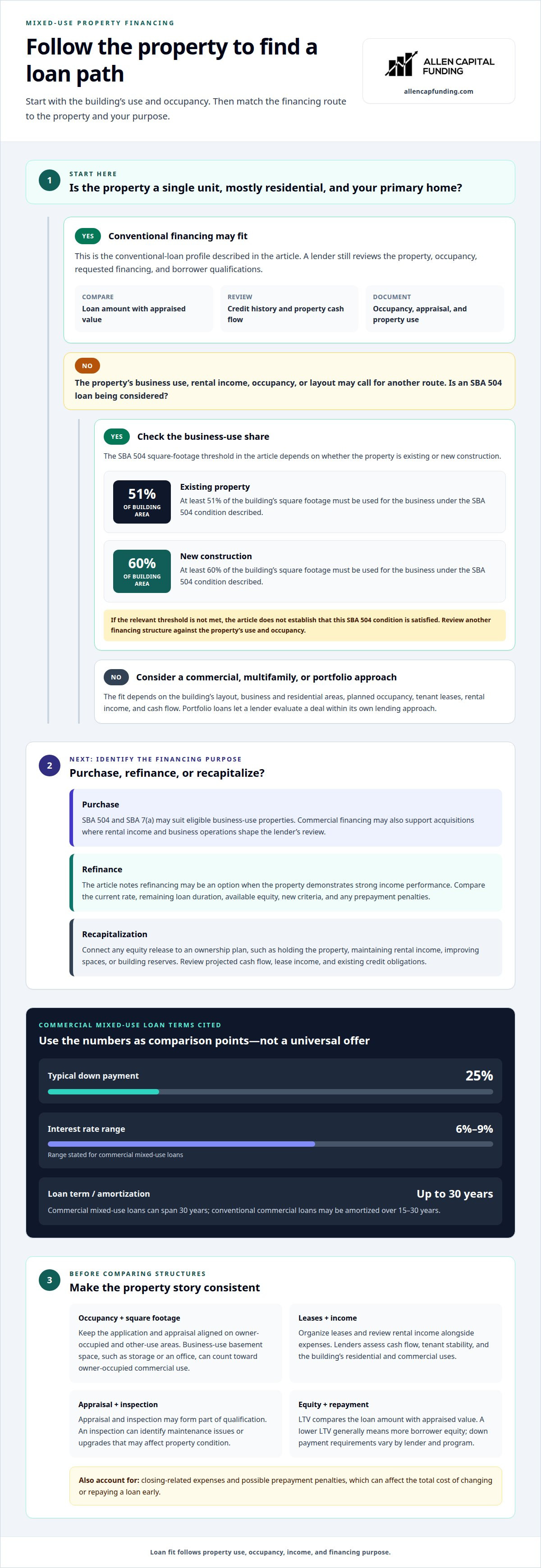
Yes, a conventional loan may suit a single-unit property that is mostly residential and serves as your primary home. For other properties, financing depends on use, occupancy, cash flow, and how the lender classifies the real estate.
Loan-to-Value and Credit Criteria
Loan-to-value (LTV) compares the loan amount with the property’s appraised value. A lower LTV generally means more borrower equity in the deal, and down payment requirements vary by lender and program. Credit history and the property’s cash flow also inform a lender’s review, though the weight given to each varies by program. Compare the requested financing with the appraisal and available equity before selecting a structure.
Tenant and Property Qualifications
Property classification starts with its actual layout and use, not simply the owner’s label. Lenders assess residential and commercial areas, occupancy plans, rental income, and whether tenants support stable cash flow. An appraisal and inspection may also form part of qualification. For an existing property financed through the SBA 504 program, at least 51% of the building’s square footage must be used for the business, according to the U.S. Small Business Administration. Review leases and document how each area is used.
Loan Sizes and Repayment Terms
Commercial mixed-use loans typically require a 25% down payment, carry interest rates of 6% to 9%, and can span 30 years. Conventional commercial loans may be amortized over 15-30 years. These differences affect payments and equity needs. Weigh repayment timing against projected income and any refinancing plan.
Loan Program Comparisons
Conventional financing may suit an owner-occupied, mostly residential single unit. SBA programs can support eligible business-use properties: for new construction financed through the SBA 504 program, at least 60% of the building’s square footage must be used for the business, according to the U.S. Small Business Administration. Commercial loans assess income and property use; portfolio loans give a lender flexibility to evaluate a deal within its own lending approach. Ask how each structure treats your occupancy, tenants, and development plans. Also account for appraisal and inspection needs, closing-related expenses, and possible prepayment penalties before committing; these can affect the total cost of changing or repaying a loan early.
Acquisition, refinance, and recapitalization uses
A mixed-use deal may involve a purchase, refinance, or recapitalization to release equity. Financing for mixed-use property should reflect the property’s income, spaces, and plans for its residential and retail uses.
Purchase and Refinance Programs
For a purchase, SBA 504 and SBA 7(a) programs may suit eligible business-use properties. Commercial financing can also support acquisitions where rental income and business operations shape the lender’s review.
Refinancing may be an option when the property demonstrates strong income performance. Owners can use cash-out equity for improvements or change loan terms. Compare the current interest rate, remaining loan duration, equity, and prepayment penalties with the new financing criteria.
Down Payments for Purchases and Refinancing
A purchase down payment determines how much capital the buyer must contribute and how much financing the project needs. The bank and Certified Development Company fund the remaining shares. This structure is one program example, not a universal requirement for every property.
For refinancing, available equity affects potential cash-out proceeds and the replacement loan’s structure. Consider the appraisal value, financial health, market conditions, and whether funds will support improvements, reserves, or continued rental income. A stronger equity position may broaden refinancing options.
Recapitalization should connect to a clear ownership plan: hold the property, maintain rental income, improve spaces, or build reserves. Review projected cash flow alongside existing credit obligations and lease income before changing the capital structure. Financing for mixed-use property can be assessed against these goals through a real estate financing review.
Stabilization and occupancy requirements
Occupancy records and property income help lenders assess a mixed-use mortgage. For commercial real estate, the appraisal, leases, and application should describe the same building uses.
Appraisal and Occupancy Documentation
For an SBA 504 request, include the proposed occupancy percentage in the property appraisal report. The application’s owner-occupied and other-use square footage must match the appraisal’s total, including business-use basement space. Basement areas used for business purposes, such as storage or an office, can count toward owner-occupied commercial use. Clear records help show how residential and business areas support the proposed financing.
Keep the building’s use consistent across the application and appraisal. If a basement serves as business storage, report that in both documents. An inspection can identify maintenance issues or upgrades that may affect the property’s condition. These details help lenders assess the building alongside the proposed occupancy.
Rental Income and Property Valuation
Lenders assess rental cash flow to determine whether income can cover loan payments. They also examine expenses and capitalization rate to evaluate property value and potential appreciation. Existing leases provide evidence of tenant stability and rental-income continuity. For example, a retail tenant’s lease and an apartment lease document distinct spaces, uses, and income sources in one building.
Review each lease alongside current expenses and projected income. This clarifies whether cash flow depends on one tenant or several uses. A lender may consider the appraisal, occupancy plan, and lease record together when assessing the residential and commercial areas. This matters especially when rental income supports the mortgage payment.
Owner-occupancy can shape the loan structure. Commercial lenders may impose strict rules when a borrower plans to live in more than 40% of a building financed with a commercial loan. That restriction can affect owners combining a residence with business space. Compare planned occupancy with the property’s documented uses before selecting a mortgage or setting an interest strategy. An aligned appraisal, application, and lease package gives the lender a consistent view of the building’s use and income.
Multifamily and mixed-use property financing
Financing options include commercial loans, bridge loans, and eligible government-backed programs such as SBA 7(a). FHA or VA financing may also fit certain owner-occupied properties, depending on business-use space and occupancy.
Building layout helps determine the financing path. Vertical mixed-use properties often have retail on the ground floor and apartments above. A building with five or more attached apartment units and stores requires a commercial loan. For multifamily owners, the key question is whether rental income supports the debt while meeting the property’s use and occupancy criteria.
Government-backed mixed-use loans typically carry rates from 6% to 16%. Bridge loans often last 6-24 months and may use interest-only payments. These short-term structures can serve a project with a defined transition, such as completing improvements before seeking permanent financing. Match the repayment plan to the property’s income timeline and refinance strategy.
FHA financing may be available when commercial business uses up to 49% of the space. VA financing may fit when up to 25% of the property is used for business. SBA 7(a) is another program for eligible mixed-use projects. These options differ in occupancy and use criteria, so the intended living and business areas matter from the start.
State and local zoning rules affect which uses a property can support. Before financing, confirm that the proposed residential, retail, or other commercial use complies with local zoning and usage restrictions. A mismatch between permitted use and the operating plan can complicate lending, development, or future growth. Document the property’s current uses and planned occupancy for the financing review.
For a multifamily property with ground-floor retail, organize rent records, leases, occupancy plans, and renovation goals into one financing picture. That helps connect income from separate spaces with the loan structure and any later refinance. Explore real estate financing options for a strategy aligned with your property’s uses and growth plans.
Allen Capital Funding
Allen Capital Funding helps business owners assess funding options for mixed-use real estate, including purchases and business-use projects. Turn to the team when weighing occupancy, property income, or how a financing structure fits your plans. Options include SBA Loans, Real Estate, Credit Lines, and Working Capital. The right path depends on the property’s uses and the business’s funding needs, so a clear project overview can guide the discussion. Allen Capital Funding provides expert guidance and tailored funding options to support strategic financial decisions. If you’re planning an acquisition or considering how to fund a property project, contact Allen Capital Funding to discuss your goals.
Build your next property move with a clear plan
Choose a financing path that supports the property’s role in your broader business strategy. Before moving forward, define the intended use, capital needed, and how the building should contribute to future growth. This gives the financing discussion a practical starting point, whether you’re pursuing an acquisition or planning a later transition.
Allen Capital Funding offers Real Estate solutions alongside SBA Loans and Credit Lines. Its team can help you consider funding options in light of your business goals and property plans. Financing for mixed-use property works best when its structure reflects both the building’s uses and the purpose of the investment.
Contact Allen Capital Funding to discuss the next step for your property plans. A clear objective can help turn a complex financing decision into a focused path forward.
Frequently Asked Questions
What are Mixed-Use Loans?
Mixed-use loans finance properties that combine residential and commercial activity, such as apartments above a storefront. Because the loan supports a real estate asset with multiple uses, the lender evaluates how those uses contribute to the project. For example, an owner might operate a business on the ground floor while earning rental income from apartments upstairs.
Does the property need to be fully stabilized?
A property does not always need to be fully stabilized to qualify for financing. Lenders can assess current leases, existing income, occupancy, and planned improvements, with the financing structure determining how those factors are weighed. If a property is still leasing space, present its current tenant mix alongside a clear plan to reach stable operations and meet payments during the transition.
How much can I borrow, and what are the terms?
The amount you can borrow depends on the appraisal, available equity, property cash flow, tenant leases, and program criteria. Terms also vary with the financing structure and the project’s intended use. Frame the request by connecting the funds needed to documented property income, planned improvements, and the repayment capacity of the business or ownership entity.
What are typical commercial real estate loan terms?
Commercial real estate loan terms set the repayment schedule, interest structure, collateral, and conditions attached to the financing. Review how payments fit projected property income, as well as any restrictions on future borrowing or property changes. For a mixed-use building, consider whether separate residential and commercial income streams could support payments if a tenant space becomes vacant.
What are typical down payment, interest rate, and loan term requirements for mixed-use property loans?
Down payment, interest rate, and repayment term depend on the loan program, property value, borrower profile, and income strength. A larger equity contribution can affect the amount financed, while income and perceived risk influence pricing and structure. Compare the repayment plan with projected cash flow, planned improvements, and how long you expect to hold the property.
What are the owner-occupancy requirements for mixed-use property financing?
Owner-occupancy requirements depend on the loan program and how the property’s space will be used. Distinguish areas occupied by the owner’s business from those rented to residents or commercial tenants. In an application, describe the planned use of each area clearly and consistently. This helps align the financing request with the property’s operating plan and the program’s occupancy criteria.



Comments