
Emergency business funding for unexpected costs and cash flow
Emergency business funding for unexpected costs isn’t always a lump-sum loan. It may mean a short-term loan for an immediate bill or a business line of credit for expenses that arise over time. Short-term business loans are typically repaid within a year, so compare the repayment schedule as carefully as the amount you receive.
An unexpected repair, a late customer payment, or a bill due before revenue arrives can strain business cash flow. This guide explains emergency business loans, compares funding options for different needs, and outlines practical ways to plan for cash-flow gaps and upcoming bills. Weigh the urgency of the expense against repayment demands before choosing a funding route.
Table of Contents
1. Common unexpected business expenses
Equipment failures, market shifts, legal issues, natural disasters, and supply chain disruptions can create sudden expenses. A broken refrigeration unit, for example, may require urgent repairs while also interrupting a café’s sales. The Consumer Financial Protection Bureau reported that 41% of small-business owners experienced an unexpected expense in the past year. Planning starts by identifying which events could interrupt your specific operations.
Disruptions can affect more than a damaged asset. A supplier delay may force you to source materials elsewhere, pay for expedited delivery, or postpone customer orders. Severe weather can damage property and interrupt operations. Review your property, liability, and business interruption insurance to understand how your business is covered. Record past incidents, their costs, and the time needed to recover.
Professional and employee-related expenses can also arise without warning. You may need legal advice after a contract dispute or temporary staff when an employee is unavailable during a busy period. A payroll gap or required training can put pressure on cash reserved for rent and suppliers. Include these possibilities in your expense review, along with repairs, inventory replacement, and urgent technology support.
Use past expenses to set an emergency savings goal by listing unexpected costs your business has faced and calculating the total financial impact of each incident. Businesses are often advised to save enough to cover three to six months of operating expenses. Treat this as a planning benchmark, not a substitute for assessing your own risks. Review the fund at least annually and adjust it when staffing, suppliers, equipment, or operating costs change.
After using a reserve, include rebuilding it in your cash plan. Keep emergency savings separate from everyday spending, then set aside a manageable portion of profits to replenish it. If a bill comes due before cash is available, compare the cost and repayment schedule before using a business credit card or borrowing. When exploring options for emergency business funding for unexpected costs, Allen Capital Funding recommends matching the funding choice to the urgency and expected cash inflows.
2. Business lines of credit
A business line of credit can help cover a sudden repair, inventory purchase, or temporary income gap. You draw funds as needed, up to the approved limit, and pay interest on the amount borrowed. Arranging a line before an emergency can provide a reserve to draw on when costs arise, rather than leaving you to apply during a cash crunch.
What credit score and revenue requirements apply to emergency business loans? Requirements vary by financing type, and lenders may weigh credit history, revenue, cash flow, existing debt, and time in business. Some invoice financing and merchant cash advance providers may consider FICO scores as low as 500, but that figure does not set a general threshold for business loans or lines of credit.
How quickly can a business get an emergency loan or line of credit? Some peer-to-peer lenders respond to funding requests within 24 hours, while many lenders can approve loans within 24-48 hours when applicants have documents ready. Approval timing isn’t the same as funding speed, so organize financial statements, revenue records, and details of the expense before applying.
A business credit card can cover urgent purchases, such as a replacement part or essential supplies. It may be convenient for a smaller bill, but interest and fees can increase the total cost. Compare the repayment terms with expected income, and avoid relying on credit cards for repeated cash shortfalls that may become harder to repay.
For businesses with weaker credit, the type of funding matters. Invoice financing uses unpaid invoices to access cash, while a merchant cash advance is repaid as a percentage of card sales. Review the repayment structure alongside your receivables and sales, then match it to the timing of the expense. Explore business funding options as you compare available approaches.
3. Managing cash flow and bill due dates
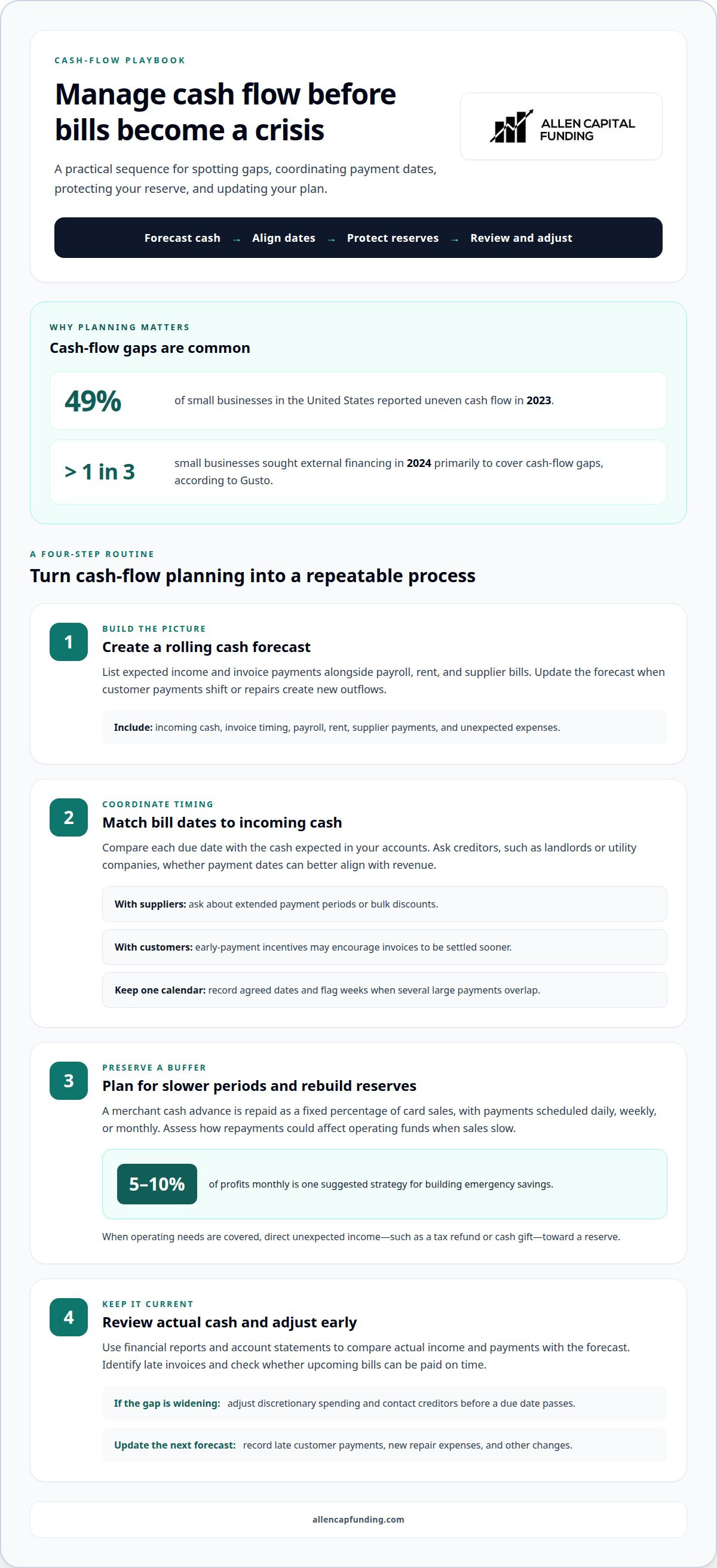
Uneven cash flow can leave a business short even when sales are steady overall. In 2023, 49% of small businesses in the United States reported uneven cash flow. Gusto reported that more than 1 in 3 small businesses sought external financing in 2024 primarily to cover cash-flow gaps. Build a rolling forecast that lists expected income, invoice payments, payroll, rent, and supplier bills. Update it as customer payments shift or repairs create new outflows.
Compare each bill’s due date with the cash expected in your accounts. Ask creditors, such as landlords or utility companies, whether payment dates can better align with incoming revenue. Suppliers may offer extended payment periods or bulk discounts, while early-payment incentives may encourage customers to settle invoices sooner. Record agreed dates in one calendar and flag weeks when several large payments overlap.
A merchant cash advance is repaid as a fixed percentage of card sales, with payments scheduled daily, weekly, or monthly. Because repayments track card revenue, assess how they would affect funds needed for running costs during slower sales periods. Also direct unexpected income, such as a tax refund or cash gift, toward a reserve when operating needs are covered. Setting aside 5-10% of profits monthly is one suggested strategy for building emergency savings.
Monitor cash flow regularly using financial reports and account statements. Compare actual income and payments with your forecast, identify late invoices, and check whether you can pay upcoming bills on time. If the gap is widening, adjust discretionary spending and contact creditors before a due date passes. Record changes, including late customer payments and new repair expenses, so your next forecast reflects current conditions rather than outdated assumptions.
4. Business emergency funding options
Emergency business funding for unexpected costs may include a line of credit, term loan, merchant cash advance, or invoice financing. A line of credit lets you draw funds as needed, with interest charged on the amount borrowed. A term loan provides a lump sum, while a merchant cash advance is repaid as a fixed percentage of card sales. Invoice financing turns unpaid invoices into cash, though factoring fees can reduce profits.
Compare each option’s costs and repayment schedule with projected revenue. Short-term business loans are typically repaid within a year, and their annual rates range from 6% to 30%, depending on credit and terms. Factoring fees can reduce revenue, while SBA loan fees vary by loan type and term. Choosing emergency business funding for unexpected costs means weighing the total repayment against cash available for regular operations.
The SBA offers disaster loan programs for eligible needs. Physical damage disaster loans can repair or replace disaster-damaged assets; Economic Injury Disaster Loans can cover essential operating costs until normal operations resume. Collateral is required for each loan type over $25,000.
Government grants may provide funds without repayment, but program rules determine eligibility and permitted uses. Check whether the emergency and expense fit a grant’s stated purpose before relying on grant funds. Grants and disaster loans meet different needs: a grant may not require repayment, while a disaster loan must be repaid.
Match the funding option to the expense and your ability to repay. Invoice financing may help address a cash-flow gap caused by unpaid customer invoices; equipment financing can fund a specific equipment purchase. For broader operating needs, compare a line of credit with a lump-sum loan. Before pursuing emergency business funding for unexpected costs, identify the amount needed, the payment timeline, and how repayments could affect essential expenses.
Allen Capital Funding: Credit Lines
Allen Capital Funding helps businesses explore funding options when an unexpected expense strains cash flow. A Credit Line may suit a business that needs flexible access to capital for changing expenses, while an SBA Loan or Working Capital may better fit other needs. Real Estate financing can support qualifying property-related business plans.
Consider the expense, its urgency, available cash, and how repayment fits future revenue. Allen Capital Funding provides guidance to help business owners compare suitable options and connect funding decisions with broader financial plans. If you’re weighing a Credit Line or another business funding route, contact Allen Capital Funding to discuss your needs.
Build a funding plan before the next disruption
A funding decision works best as part of a wider plan to protect operations, not just as a response to the bill at hand. Prioritize essential commitments, identify expenses that may need outside capital, and consider how repayment fits expected revenue. This makes emergency business funding for unexpected costs part of a deliberate financial strategy.
Before choosing a path, gather a current cash-flow forecast, a clear description of the expense, and the timing of upcoming obligations. Consider how slower sales or delayed customer payments could affect repayment. These details help frame a practical funding discussion and connect immediate needs with longer-term plans.
Allen Capital Funding offers Credit Lines, SBA Loans, and Real Estate financing. A discussion can help you consider how a funding option fits your business’s needs and financial direction. Explore funding options with Allen Capital Funding and take a considered next step toward stronger financial readiness.
Frequently Asked Questions
What is an emergency business loan?
An emergency business loan is borrowed money intended to cover an urgent business expense, with repayment required under agreed terms. Unlike a grant, it creates a debt obligation. Unlike a credit line, it generally provides a set amount rather than ongoing access as you repay funds. For example, a business could use a loan to restore a damaged point-of-sale system and continue taking customer payments.
When should I use it?
Use emergency financing when a necessary expense threatens operations and available cash can’t cover it without disrupting other commitments. A broken delivery vehicle, for instance, could keep a service business from reaching customers. Before borrowing, compare the bill’s due date with incoming revenue and map repayments against expected cash. If the expense can wait, saving or adjusting payment timing may reduce the need to borrow.
Why do I need it?
Emergency funding can help address a pressing expense while preserving cash for other essential obligations. A retailer facing an urgent security-system replacement, for example, may need to keep funds available for payroll and supplier invoices. Borrowing also creates a repayment commitment, so define the business need and how the expense supports continued operations before choosing a funding route.
What emergency funding options are available for small businesses in the U.S.?
Options include term loans, lines of credit, invoice financing, equipment financing, purchase order financing, and SBA loans. Each serves a different need: equipment financing targets a specific equipment purchase, while purchase order financing addresses costs tied to fulfilling an order. SBA disaster loans address qualifying disaster-related needs, and grants may provide funds without repayment. Match the option to the expense and its permitted use.
What documents are needed to apply for emergency business funding?
Prepare an application file with recent business bank statements, financial statements, tax returns, and a current debt schedule. Add records that explain the emergency, such as a repair estimate, supplier invoice, or purchase order. A cash-flow forecast can show how you plan to handle repayment. Organize the documents consistently so revenue, existing obligations, and the funding need are easy to understand.
What are the risks of merchant cash advances and other high-cost emergency financing?
High-cost financing can make an expense substantially more expensive once interest and fees are included. A merchant cash advance deducts repayments as a percentage of card sales, leaving less revenue for payroll, inventory, and routine bills. Compare total repayment, payment frequency, and the effect on operating cash before accepting an offer. Even a fast funding decision needs a clear repayment plan.



Comments