
Business funding to scale my business faster through loans and credit
Growth can outpace cash flow even when customer demand is strong. A business line of credit lets a business draw up to an agreed limit and reuse available credit as it pays down the balance, making it one option for business funding to scale my business faster. Term loans and equipment financing can suit more defined investments. The right fit depends on what growth requires and when the funds are needed.
It makes sense to seek capital before an opportunity slips by. Borrowing works best, though, when the funding structure matches the purpose, timing, and repayment plan, not simply the amount available. A clear view of these factors can help you move forward with greater confidence.
This article explains how loans and credit can support growth, from covering working capital needs to purchasing equipment or inventory. You’ll also learn what a business line of credit offers, how to estimate funding needs for the next few years, and how to prepare for a financing decision that supports your goals.
Table of Contents
1. Term loans, lines of credit, and equipment financing
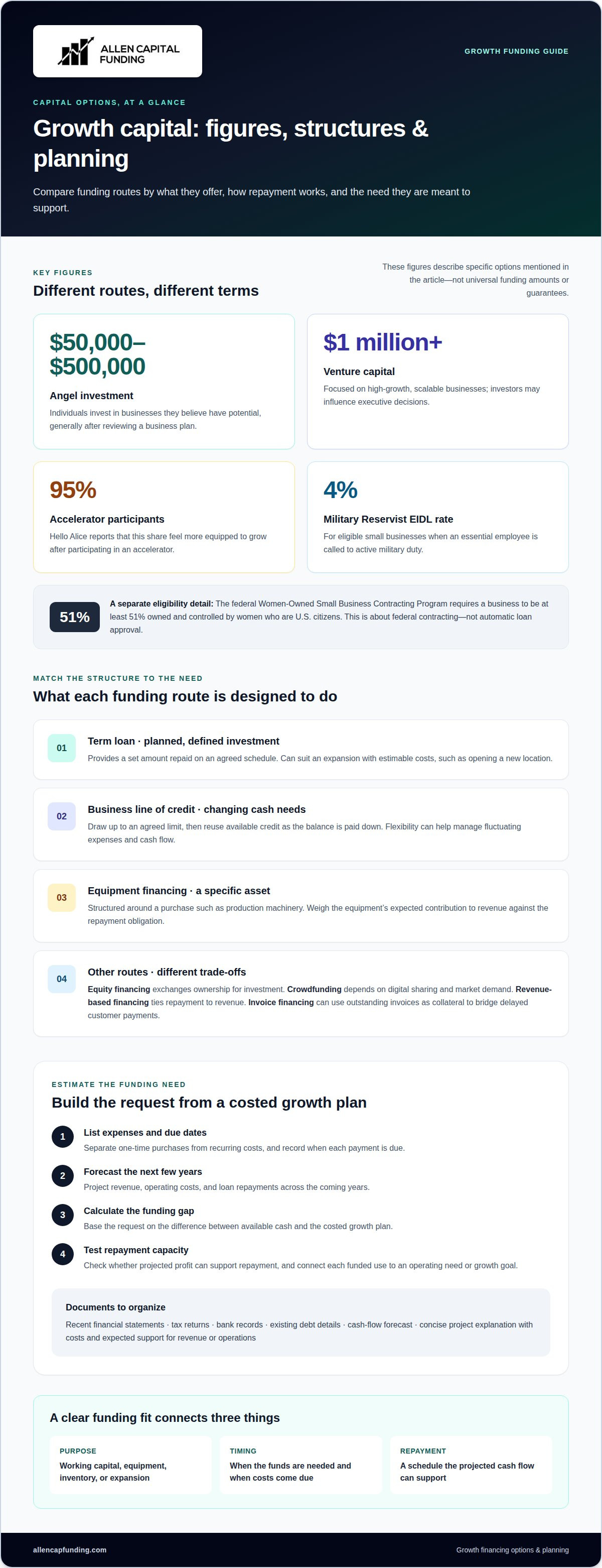
A term loan provides a set amount for a defined investment, repaid on an agreed schedule. It can suit a planned expansion with costs you can estimate, such as opening a new location. A business line of credit lets you draw up to an agreed limit and reuse available credit as you pay it down. This flexibility can help manage changing cash needs. Equipment financing is structured around a purchase such as production machinery, so weigh the equipment’s expected contribution to revenue against the repayment obligation.
SBA-guaranteed financing can give small businesses another route to capital. The U.S. Small Business Administration sets guidelines, while partner lenders and other participating organizations make the loans. SBA-guaranteed loans generally have rates and fees comparable to non-guaranteed loans. Applicants normally need to meet SBA size standards, show ability to repay, and present a sound business purpose. According to the U.S. Small Business Administration, a business must be at least 51% owned and controlled by women who are U.S. citizens to qualify for the federal Women-Owned Small Business Federal Contracting Program. That program relates to federal contracting, not automatic loan approval.
Funding support can extend beyond lending. The U.S. Small Business Administration offers free or low-cost counseling and training to help owners plan and operate. Farmers and ranchers can explore Farm Service Agency loans, while rural businesses may find support for starting, expanding, or maintaining operations. The Military Reservist Economic Injury Disaster Loan Program offers eligible small businesses loans at a 4% interest rate when an essential employee is called to active military duty.
For state and local grants or loan programs, start with your state economic development agency and city or county small-business offices. Compare eligibility, permitted uses, application steps, and whether a grant is competitive. Grants may come with spending conditions. Fast financing can create repayment pressure if terms, fees, payment frequency, or collateral obligations are unclear. Review the complete agreement and payment schedule before accepting, and avoid signing under pressure.
2. Why is funding important for small business growth?
Funding can help a business act on growth opportunities without relying on a single source of cash. Personal funds and bootstrapping preserve ownership, but may limit what’s available for hiring, inventory, or expansion. Credit cards offer revolving credit, yet carrying balances can increase repayment pressure. Equipment financing ties borrowing to a specific asset, while a loan can support a broader investment plan.
How much can a growing business qualify for? The amount depends on the program, the lender’s review, the business’s ability to repay, and the stated use of funds. A clear request tied to projected costs gives lenders a basis for assessing the financing need.
Prepare financial documents before applying. Organize recent financial statements, tax returns, bank records, existing debt details, and a cash-flow forecast. Add a concise explanation of the project, its costs, and how it supports revenue or operations. These records help lenders assess repayment capacity and spot gaps between the funding request and the business plan.
Rural businesses may need financing for expansion, ongoing operations, or seasonal demands. Their funding plan should connect the project to local business activity and show how income will support repayment. For B2B companies and seasonal operations, invoice financing can use outstanding invoices as collateral, helping bridge the wait between delivering work and receiving payment.
Funding can also support a business mission beyond immediate purchases, such as building capacity to serve a new market. Compare each source by its repayment structure, flexibility, and fit with the intended use. A structured funding review can help bring the need, supporting documents, and repayment plan into one clear picture.
3. Loan uses including working capital, equipment, and inventory
Start by matching each expense to the funding purpose. Working capital can cover operating costs while customer payments are pending; equipment financing can fund machinery that expands production. Inventory funding may help a retailer stock products before a busy sales period. SBA 7(a) loans can support working capital, equipment purchases, and expansion. A plan for business funding to scale my business faster should connect each use to a specific operating need, such as fulfilling a large order or increasing output.
To estimate the capital required, list planned expenses and when each payment is due. Then forecast expected revenue, operating costs, and loan repayments across the next few years. Separate one-time purchases from recurring costs, and base your request on the gap between available cash and the costed growth plan. This helps lenders assess the request and lets you test whether projected profit can support repayment. That analysis makes business funding to scale my business faster a more deliberate decision.
Business loans provide capital that must be repaid, while equity financing exchanges an ownership stake for investment. Angel investors are individuals who invest in businesses they believe have potential, generally after reviewing a business plan; typical amounts are $50,000 to $500,000. Venture capitalists focus on businesses with high growth potential and scalability, with investments of $1 million or more, and may influence executive decisions. Crowdfunding depends on digital sharing and market demand, while revenue-based financing ties repayment to revenue.
Accelerators can combine training, mentoring, and access to capital or grant opportunities. Hello Alice reports that 95% of accelerator participants feel more equipped to grow. Compare each program’s criteria with your launch stage, industry, and objectives before preparing an application. Grants can be competitive and may restrict how funds are spent, while investors may expect a return or ownership. Choose the source that fits the project, repayment capacity, and control you want to retain.
4. Business lines of credit
A business line of credit gives business owners access to funds up to an agreed limit. They can draw what they need and reuse available credit as they pay down the balance. Unlike a one-time business loan, this structure can suit uneven cash needs. For example, a distributor might draw funds to cover supplier invoices before customer payments arrive. Match each draw to a clear business purpose.
Use a simple cash-flow forecast to plan borrowing. Mark expected inflows and outflows, then identify timing gaps, such as payroll or inventory purchases due before sales revenue arrives. Estimate how much credit the business may need during each gap. Keep the requested limit tied to those projected needs instead of treating all available credit as growth capital. A written business plan can show how borrowing supports operations and repayment.
Eligibility depends on the lender’s criteria and assessment of the business. Organized financial statements, bank records, tax returns, and existing debt details help present the company’s financial position. Lenders may also review cash flow, operating history, and the purpose of the requested credit. A strong application connects these records to a practical repayment plan, such as using sales receipts to reduce a draw after a seasonal rush.
Flexible access can help manage timing, but repeated borrowing may leave less credit available for future needs. Track each draw, its purpose, and its expected source of repayment. Before accepting, review the credit agreement for the limit, payment schedule, interest, fees, and any collateral terms. If purchases are planned and costs predictable, compare a line of credit with financing structured for that specific investment.
For working capital needs that rise and fall, explore business credit line options and consider how each draw fits your cash-flow plan.
Allen Capital Funding
Allen Capital Funding helps businesses assess funding options based on their growth plans and financial needs. If you’re weighing a credit line against a term-based option, or planning costs for working capital, real estate, or expansion, the team can guide you through relevant financing paths, including SBA Loans. Start by connecting the funding purpose with a realistic repayment plan and your business’s cash flow. This can clarify which type of capital may suit the project before you apply. Contact Allen Capital Funding to discuss your growth goals and funding needs.
Turn your growth plan into a funding decision
Connect your growth goal to a practical funding plan. Define what the capital will make possible, when you’ll need it, and how the business expects to repay it. This clarity can help you assess business funding to scale my business faster without treating speed as the only measure of success.
Allen Capital Funding offers Credit Lines, SBA Loans, and Real Estate financing options for businesses planning their next move. Start with your business’s priorities, cash flow, and the purpose behind the request. A funding path should support the plan you’re building, not distract from it.
Contact Allen Capital Funding to discuss your business funding needs and growth goals. With a clear plan and the right support, you can take your next step with greater confidence.
Frequently Asked Questions
Why is funding important for small business growth?
Funding can help a business act on an opportunity before available cash catches up. For example, a company may need to add production capacity before fulfilling a new customer contract. Capital can also give owners room to manage the transition, such as training employees or adjusting operations as demand changes. Link funding to a clear business objective and a realistic repayment plan.
What types of business funding can help a small business scale quickly?
Several options can support growth, depending on the timing and purpose of the expense. A credit line may suit recurring cash-flow fluctuations, while equipment financing can align with a planned asset purchase. SBA loans may fit broader business purposes, and invoice financing can help B2B companies waiting on customer payments. Compare the repayment structure and flexibility with the project’s expected cash flow before choosing.
What are the eligibility requirements for SBA 7(a) and 504 loans?
SBA 7(a) applicants generally need to meet SBA size standards, demonstrate ability to repay, and have a sound business purpose. Eligibility also depends on the business’s income-generating activity, ownership character, and operating location. SBA 504 loans provide long-term, fixed-rate financing through Certified Development Companies.
What credit score, revenue, time in business, and collateral do lenders require?
There’s no universal threshold across business funding options. Lenders may assess credit, cash flow, collateral, business experience, the business plan, intended industry, and debt relative to income. These factors help show whether the business can manage repayment and whether the requested amount fits its financial position. Present accurate records and clearly explain unusual changes in revenue or debt in the application.
How do I apply for business funding and what documents should I prepare?
Begin with a defined funding purpose and a costed plan, then organize records that explain the business’s finances. Applications commonly draw on financial history, tax returns, current debt information, and a business plan describing how funds will be used. Add a cash-flow forecast showing expected income and expenses during repayment. Keep figures consistent across documents, and explain how the proposed investment supports operations or growth.



Comments